

International Project “Methods of Distributed Computer Game Development” and 3D Quest Computer Game “THE GALLERY”
Idea, implementation and interim results …
Documents of this portfolio and additional information
- Art book of the computer game The Gallery
- Graphic album of environment elements
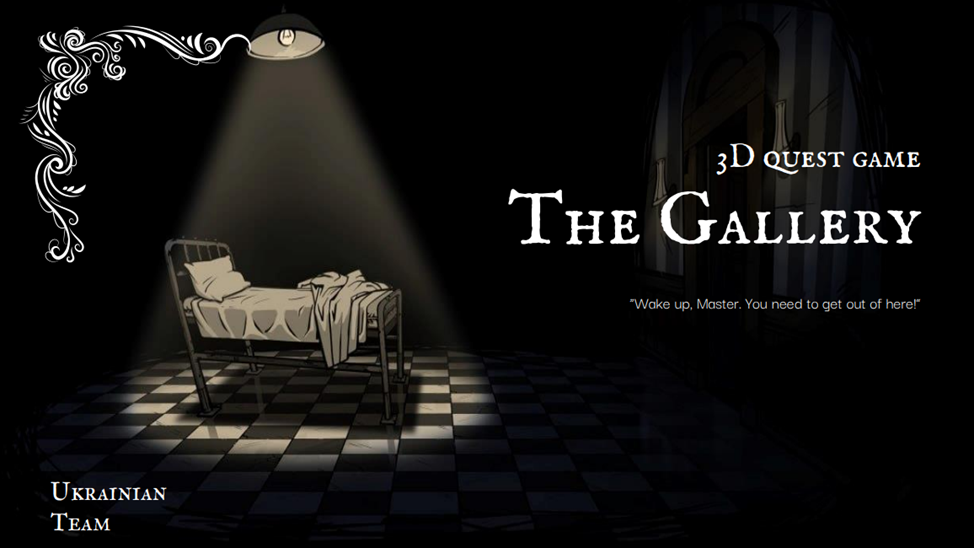
- Game presentation for Game pitching event
Detailed description of individual stages
- Conceptual design of characters and environment elements, scenario design
- Development of 3D models of The Gallery characters
- Development of character animation
- Formulation of style features and conceptual design of environment elements
The work on the project “Methods of Distributed Computer Game Development” is based on an integrated systematic approach and includes parallel work in several complementary areas.
The research component is the development of an interactive educational space that will allow managing the distributed development of digital products;
Educational and pedagogical component – integration of students into the educational process of developing computer games in a distributed hybrid format and appropriate mobility measures;
Testing and practical implementation – the use of the above research and pedagogical approaches to direct student learning and the development of computer games in a distributed hybrid format. But the most interesting author’s result of this project is the computer game “The Gallery” developed by students.
Students of the specialty 186 “Publishing and Printing”, who participated in the project from KhNUE and developed the computer game:
Valeriia Velychko (conceptual design of characters and development of an artbook), Tymur Kukharchuk (design of environment elements and development of a corresponding graphic album), Viacheslav Mysnik (development of 3D character models), Arina Trukhliak (development of character behavior animation).
Contact the project manager Oleksiy Yevsyeyev

The students who participated in the project had quite a challenge:
- To formulate the main idea of a computer game, determine the genre, style, and mechanics;
- Develop an Art Style Guide and GDD for the computer game;
- Design a scenario and gameplay scheme;
- Perform conceptual design of characters and environment elements of The Gallery computer game;
- Develop optimized 3D character models in Zbrush, prepare them for animation and integration into the Unity engine;
- Develop the animation behavior of the game characters in different ways using different software tools such as Blender, Mixamo, Rokoko;
- Develop art books to promote the computer game The Gallery;

A difficult stage was the transition from the formulated basic ideas of the computer game to the conceptual design of characters and the development of the script and gameplay scheme.
It’s important to note that our group had to work not only as an art department that develops characters for a specific task, but our team was engaged in the development of a computer game from scratch and in full, and had the opportunity to study all stages of computer game development. For this purpose, the teachers of the Department of Media Studies (Computer Game Studies) and the Department of Computer Systems and Technologies (Technologies of electronic multimedia publications) conducted relevant lectures, practical classes in a hybrid format, and master classes. In order to provide students with practical experience in solving problems related to the development of computer games in professional studios, an external expert was involved in our project – Mrs. Natalia Prybitkova, Product Art Director, Gazeus Games, Canada. Thanks to the involvement of a specialist in this field, our project was able to share with students the real experience of solving problems related to the development of computer games.
This is how the project developed and the computer game The Gallery was born, and the team was able to move on to conceptual character design.
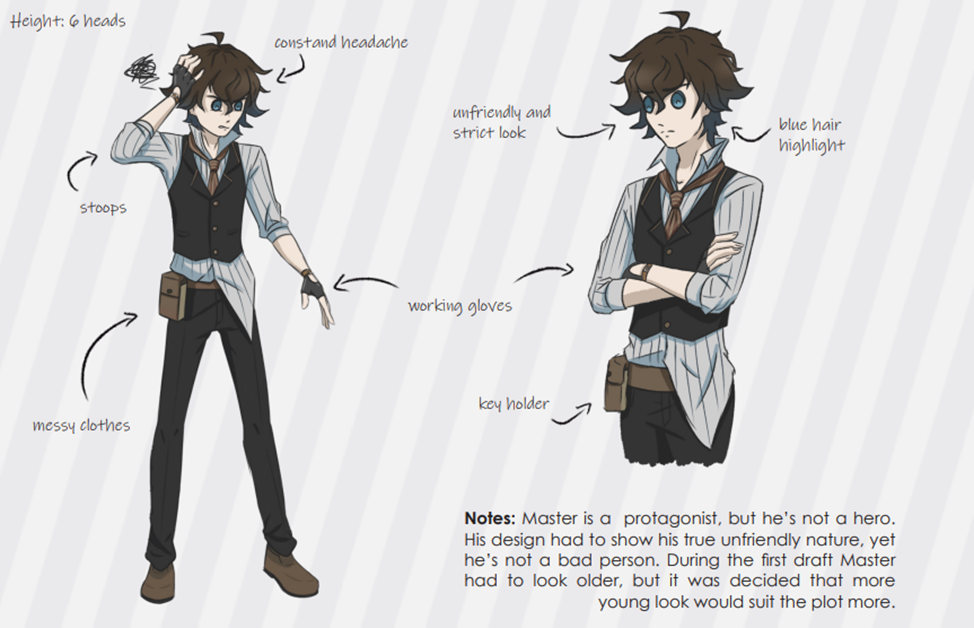
The Master
The Master is the main character and protagonist, but he is not a hero. His design was supposed to show his true unfriendly nature, but he is not a bad person. During the conceptual design, the Master was supposed to look older, but it was decided that a younger look would suit the story better.
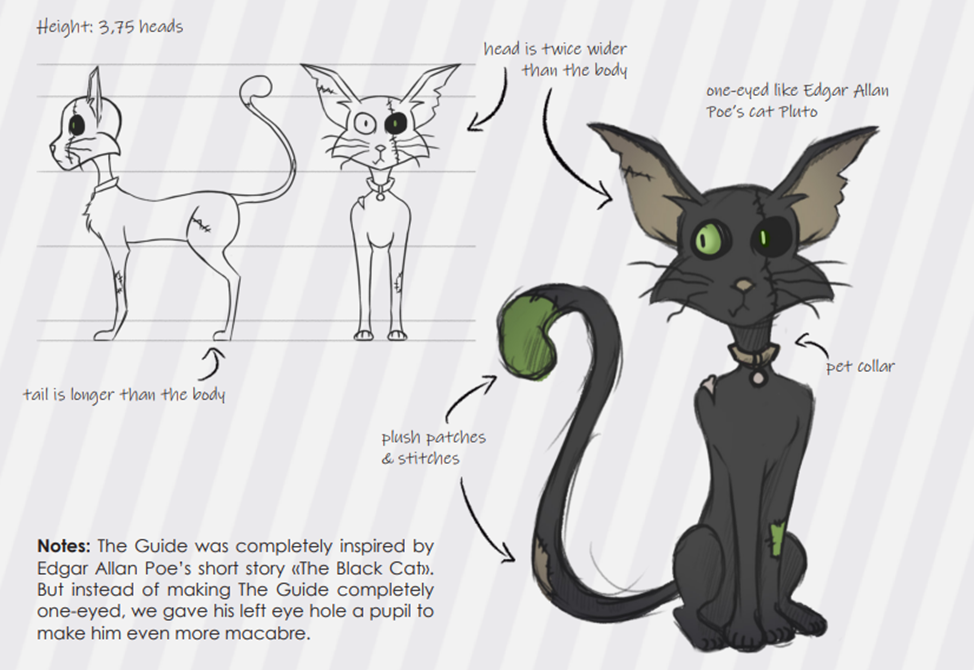
Cat. The Guide
The Guide was completely inspired by Edgar Allan Poe’s short story “The Black Cat”. But instead of making the Guide completely one-eyed, we made his pupil for his left eye to make him even more terrifying.
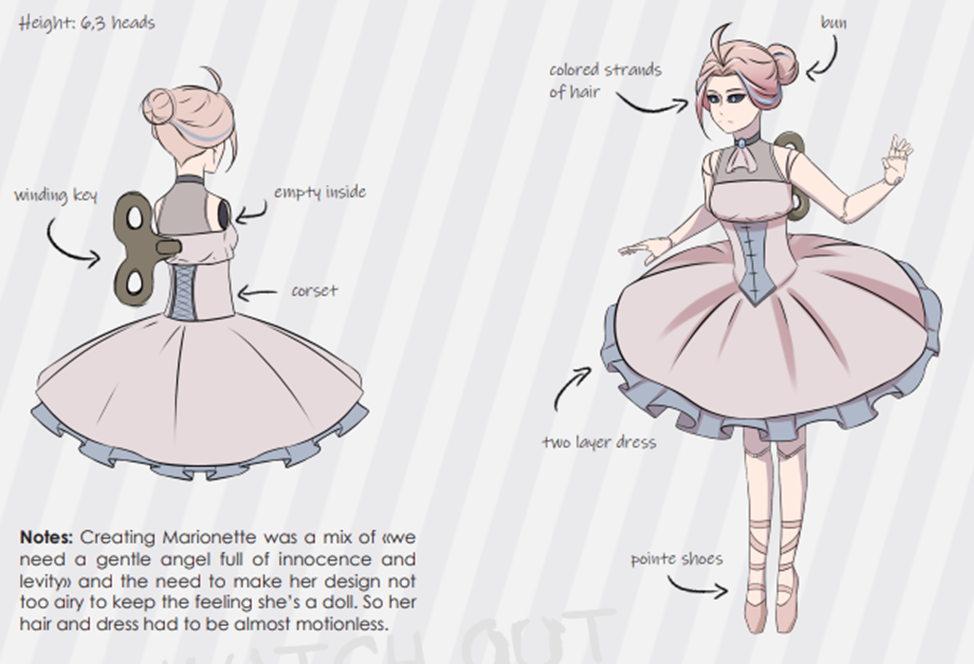
Marionette
The creation of Marionette was a combination of the fact that we needed a gentle angel, full of innocence and lightheartedness, and the need to make her design not too airy to keep the feeling that she was a doll. So her hair and dress had to be almost motionless
Profiles were written for each character, color schemes, clothing details, and emotions were developed.

We also made sketches of the gameplay and dialogues.

To proceed directly to character modeling, the corresponding projection scans and character size comparison schemes are offered
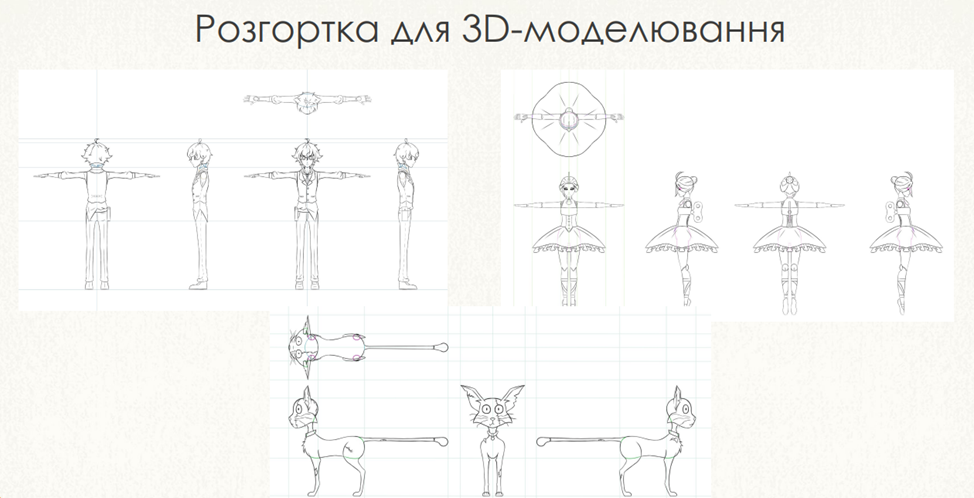
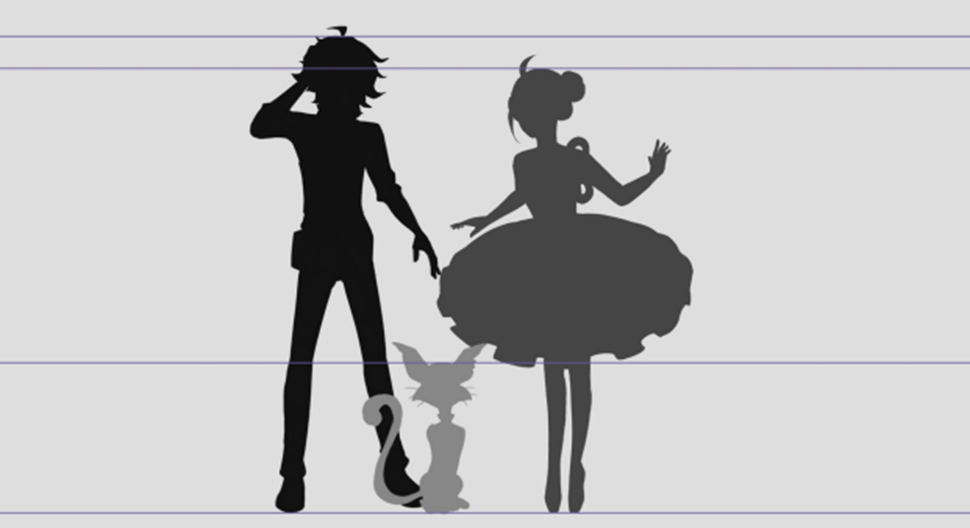
You can learn more about the process of formulating the main idea of The Gallery computer game, defining the genre, style, game mechanics, designing the scenario and gameplay scheme, as well as the most interesting and spectacular stage – conceptual design of characters and environment elements here
Artbook of the computer game Artbook The Gallery
Next is the complex and time-consuming process of direct development of 3D models.

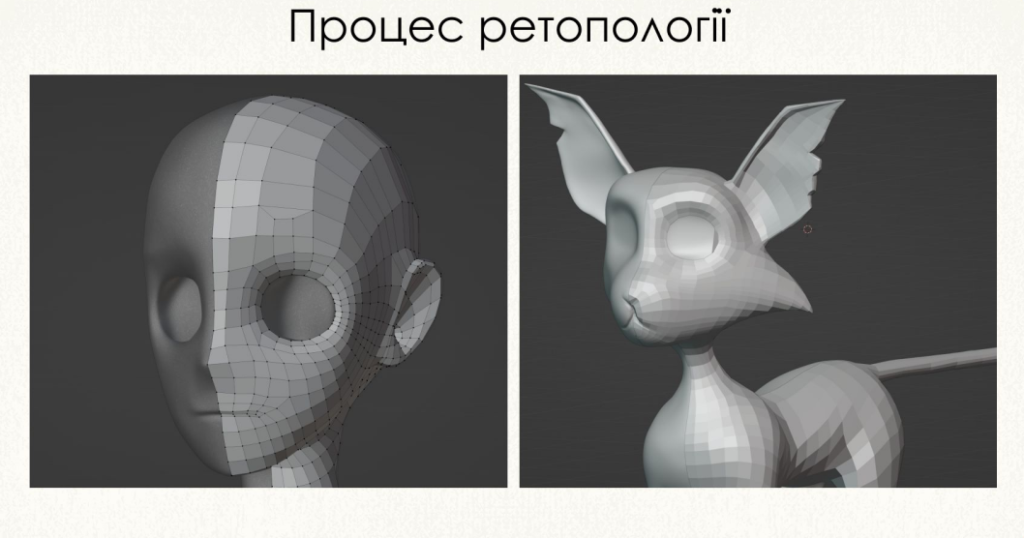

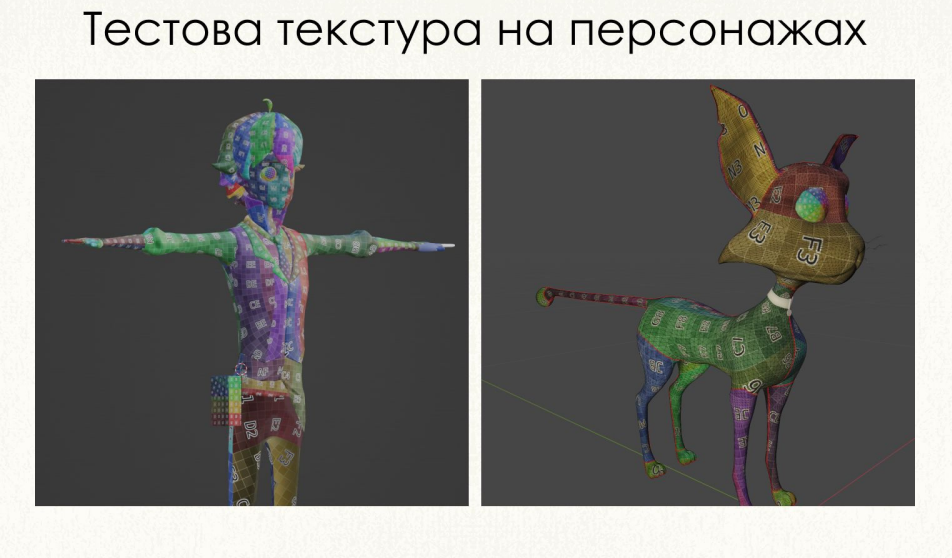
The result is 3D models of the Master and the Cat, to which animation will be added.
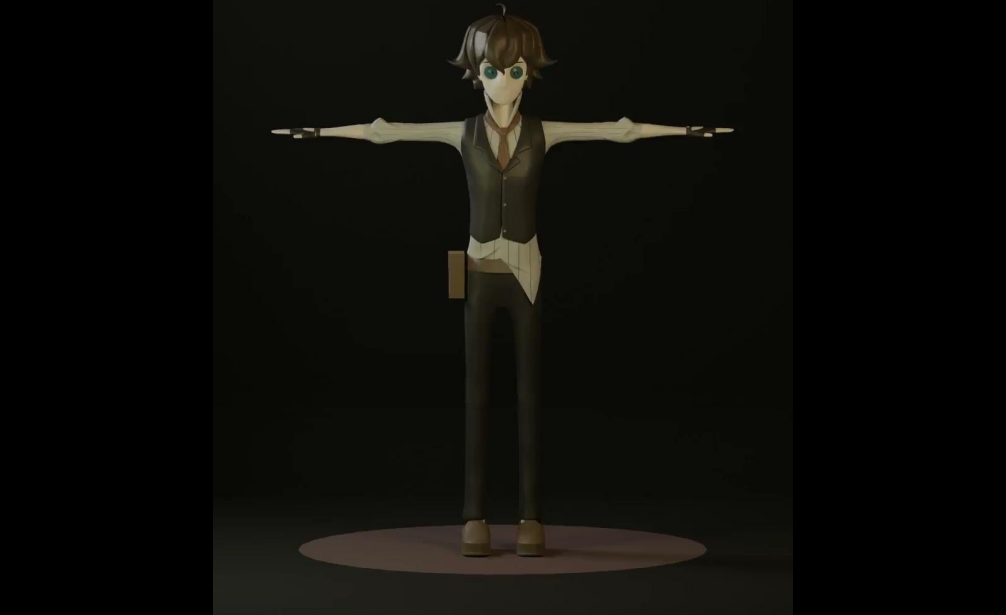
You can learn more about the process of developing 3D models of The Gallery characters here
Next, it was necessary not only to animate the characters – to give them the ability to move in space and react to certain events, but also to make them full-fledged participants in the computer game, those who will shape the plot and development of an interesting event! This stage is no less painstaking and responsible than the previous task. First, you need to learn the basics of how similar objects behave in the real world, analyze a lot of material, and use references for the main characters.

The next step is rigging, which is the process of equipping the finished 3D model with a virtual skeleton, in which all elements are connected to each other in the form of bones according to the parent-offspring principle, which greatly simplifies the animation process.

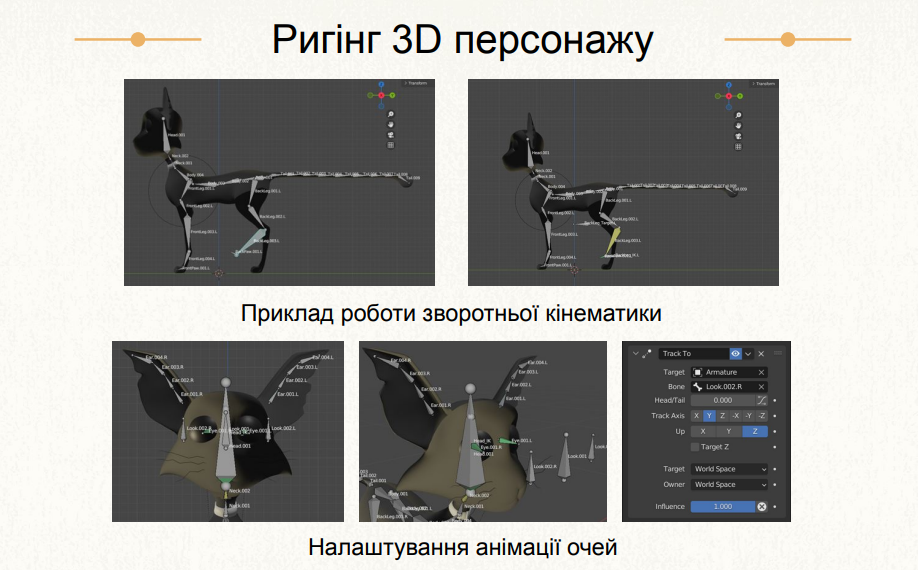
The next stage is the actual animation of the characters.
The creative approach that allows you to get an animation that will absolutely match the animator’s idea is to use keyframes and intermediate frames to calculate the necessary movements.

However, this approach is quite labor-intensive and requires a certain amount of time.
It is possible to increase the efficiency of the animation creation process by using such modern technologies as animation recycling for 3D models and rigging, for example, in the Mixamo application.

For this purpose, you can also use Motion Capturing (MoCap) technology, for example, in the Rokoko environment.

At the final stage, the results obtained must be transferred to the computer game engine – the Unity environment.
By combining the developed animations with the character, we can talk about the developed behavior

And proceed to transfer the results to the direct development of the computer game itself – the Unity environment.
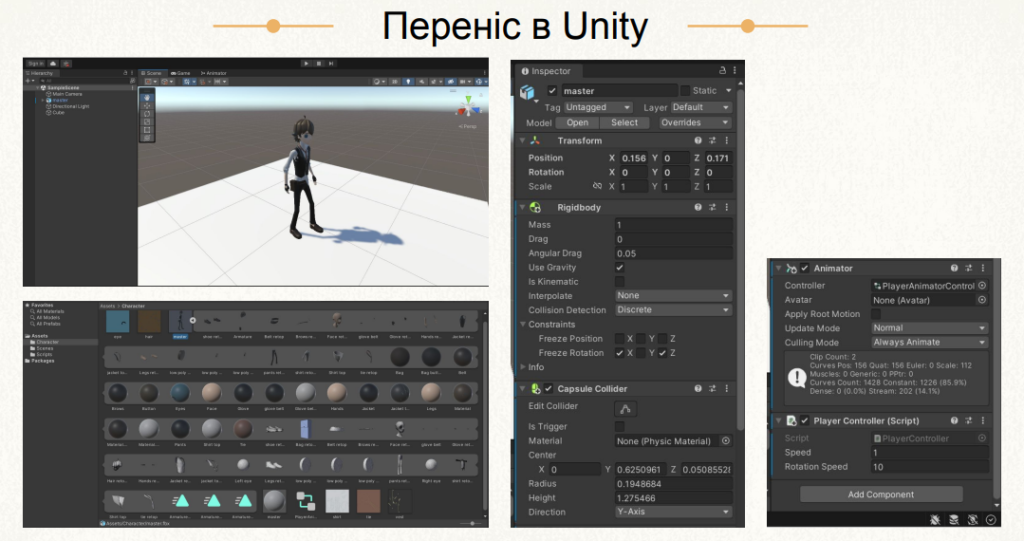
You can learn more about the process of character animation development here
But for any game, it’s not enough to develop and animate characters. That’s why the project team paid a lot of attention to the environment elements and level design.
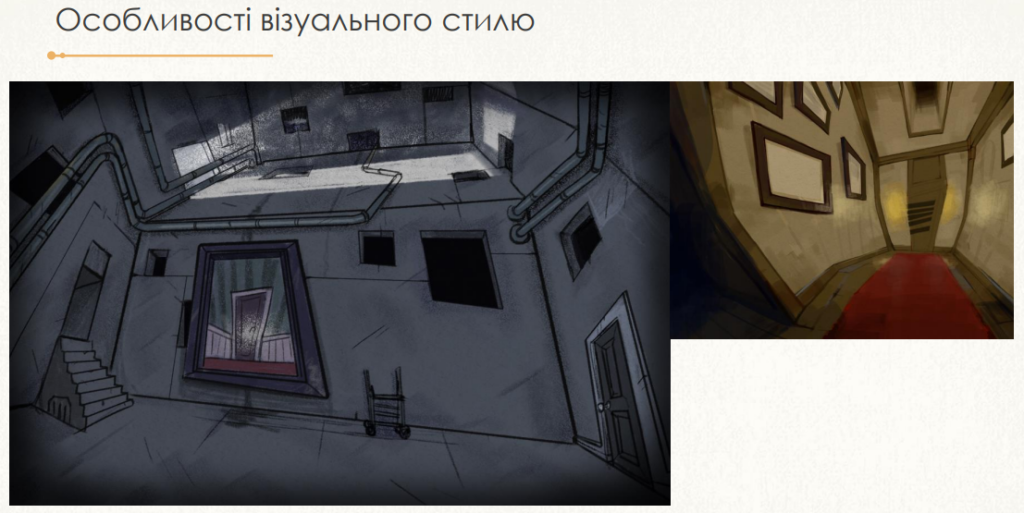
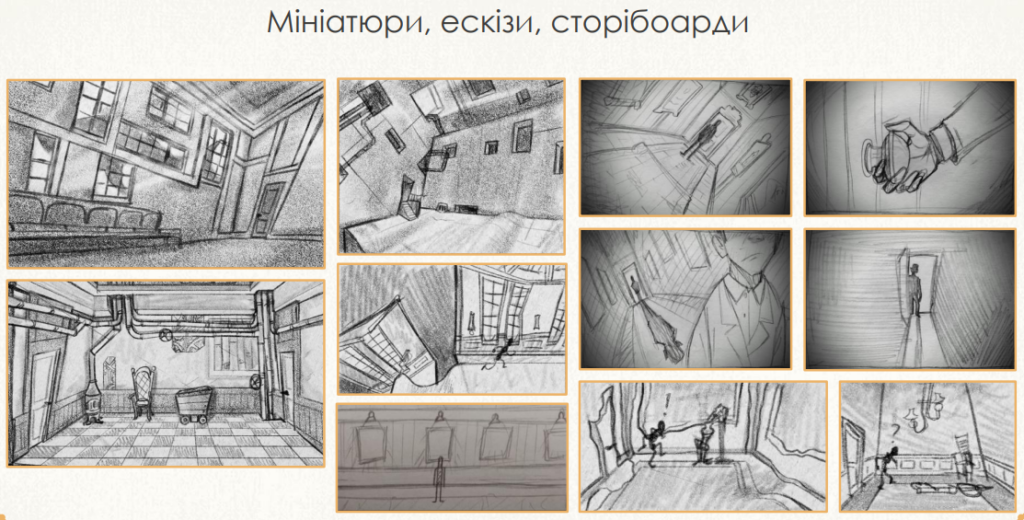

You can learn more about the process of formulating the style features and conceptual design of the elements of The Gallery environment here
Graphic album of environment elements
Contact the project manager Oleksiy Yevsyeyev
Documents of this portfolio and additional information
- Art book of the computer game The Gallery
- Graphic album of environment elements
- Game presentation for Game pitching event
Detailed description of individual stages